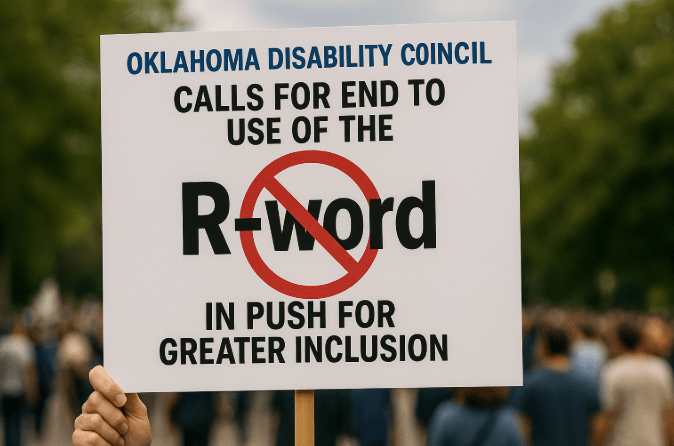
The Developmental Disabilities Council of Oklahoma has issued a renewed appeal for more respectful language in public and professional environments, urging individuals and organisations to stop using the ‘R-word’ in any context. The call forms part of a wider effort by the council to promote inclusion, safeguard dignity, and encourage businesses, policymakers and communities to adopt language practices that reflect modern understanding of disability.
Background and Purpose of the Campaign
The council, which advises on policy and supports initiatives aimed at improving the lives of people with intellectual and developmental disabilities, said that building a welcoming environment begins with addressing the everyday words that shape attitudes. The campaign underscores a growing recognition across workplaces, schools and public bodies that language can influence culture, behaviour and opportunities for participation.
Statement from the Council Chair
In a statement emphasising the organisation’s position, Kodey Toney, Chair of the Developmental Disabilities Council of Oklahoma, said the terminology historically used to describe people with disabilities has had lasting consequences. “As an advocate for people with intellectual and developmental disabilities, I believe our words matter. Terms that have historically been used to demean or devalue people with disabilities are deeply hurtful, regardless of who says them or in what context. This is not about political correctness—it is about human dignity.”
Toney added that the council’s work is grounded in the belief that respect must be embedded in day-to-day interactions. “Language should never be used in a way that diminishes the worth of any individual. Within the disability community, we work every day to promote respect and understanding, and that begins with the words we choose.”
Wider Industry and Social Context
The council’s stance aligns with a broader shift across public-sector organisations and private-sector employers who are increasingly examining their internal and external communications. Many businesses have enacted diversity, equity and inclusion (DEI) frameworks over recent years, with language guidelines now a standard component of corporate policy. Advocates argue that ensuring respectful terminology not only supports employees and customers with disabilities but also enhances brand reputation and organisational culture.
Campaigners note that while the use of such terminology has decreased in many formal settings, casual usage remains an issue—both in personal interactions and across digital platforms. They warn that normalising derogatory language can reinforce social barriers and contribute to discriminatory treatment.
Perspective from a Council Member
Heather Hancock-Blackburn, a member of the Developmental Disabilities Council of Oklahoma, emphasised the personal impact of hurtful language and the importance of recognising individual worth. “We should accept all people for who we are and our ability. Saying the R-word is wrong to say to someone.”
Her comments highlight the council’s intention to frame the issue as one of mutual respect rather than restriction. By centring the discussion on dignity and acceptance, the organisation aims to encourage the public—particularly young people and workplace leaders—to consider how language choices reflect values and affect others.
Relevance for UK and International Businesses
The council’s message comes at a time when businesses, both in the United States and internationally, face increasing expectations to take visible action on inclusion. For UK-based companies operating in or with partners in the United States, the council’s position offers a reminder of the cultural and regulatory landscape surrounding disability rights. In many jurisdictions, reinforcing respectful language falls under broader corporate responsibilities relating to equality legislation and workplace conduct.
Industry analysts note that organisations adopting stronger inclusion policies often report improved employee engagement, lower turnover and stronger community relations. As companies evaluate their social impact strategies, advocacy initiatives such as the council’s campaign can serve as practical guidance for shaping internal communication standards and fostering more considerate working environments.
Looking Ahead
The Developmental Disabilities Council of Oklahoma said it will continue to promote education around disability language and support programmes that encourage positive interaction. Its leaders hope the renewed emphasis on removing the R-word from everyday vocabulary will prompt individuals and organisations alike to reconsider the power their words hold.
With the debate over inclusive language set to remain a focal point across sectors, the council’s appeal positions respectful communication not only as a social expectation but as an essential component of modern organisational practice.