
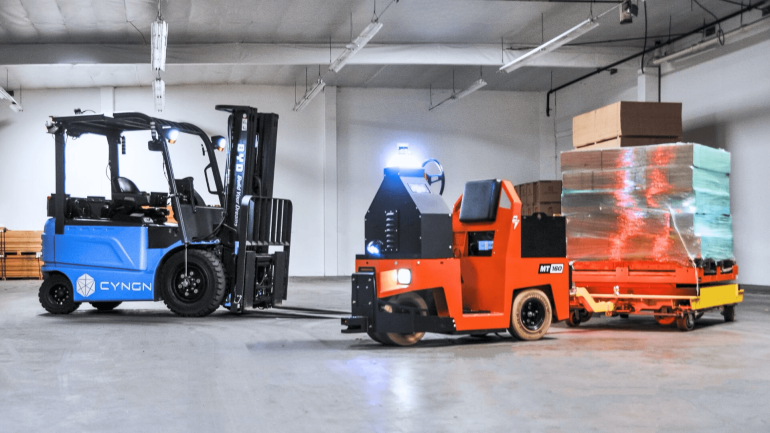
Cyngn, the US-based autonomous industrial vehicle developer, is receiving growing endorsement from manufacturers and technology partners who say its automation platform is delivering immediate operational benefits on the production floor. Early adopters of the company’s DriveMod technology report significant gains in throughput, efficiency and time-to-market, positioning the system as a viable tool for firms seeking to modernise material-handling workflows without the disruption often associated with automation rollouts.
In feedback shared across multiple industrial operations, users describe a consistent experience: the autonomous mobile robots (AMRs) integrate quickly, require minimal adjustment to existing infrastructure, and begin shaping key performance metrics soon after deployment. While automation technologies can sometimes introduce friction during early implementation, Cyngn’s partners say the transition has been notably smooth.
Flambeau Reports Strong Operational Benefits
One of the strongest endorsements comes from Flambeau, a manufacturer known for its large-scale plastic products. Joseph Peterson, the company’s General Manager and Plant Manager, highlighted the operational uplift seen since adopting Cyngn’s AMR technology.
“Cyngn’s AMRs really unlock the potential for us to increase throughput and decrease time to market. Their vehicles enable us to concentrate on efficiency and we’re really excited to increase profitability, improve our service levels, and get to market faster than our competitors.” — Joseph Peterson, GM & Plant Manager of Flambeau.
This view reflects the core value proposition Cyngn has been promoting: automation that does not simply replace manual tasks, but actively enhances end-to-end production processes. For firms under pressure to reduce cycle times, stabilise labour requirements and manage rising cost structures, technologies that accelerate output while remaining easy to integrate are becoming increasingly attractive.
Adoption Expands Across Manufacturing Sectors
The company, headquartered in Mountain View, California, said on 20 November that its technology has now been tested and evaluated by a mix of end-users, OEM partners and industrial technology suppliers. Each brings a different operational lens, but many report similar outcomes once DriveMod is introduced onto the factory floor.
A recurring theme among partners is the system’s ability to blend into live production environments. Instead of requiring major infrastructure changes—such as extensive retrofitting, new physical guides or fully redesigned layouts—DriveMod-enabled vehicles are reported to operate effectively within existing facility constraints. This reduces downtime and enables firms to see productivity improvements in a matter of days rather than months.
Automation Demand Continues to Rise
From a strategic perspective, the interest in AMR solutions also reflects wider industrial trends. Manufacturers in Europe, North America and Asia are accelerating investment in automation to counter labour shortages, stabilise production output and maintain global competitiveness. As supply chain pressures continue to influence manufacturing timelines, technologies that allow companies to compress lead times while maintaining product quality are increasingly valuable.
Cyngn’s model focuses on making autonomy interoperable across a range of vehicle types and industrial settings. Rather than offering a single-purpose robot, DriveMod can be integrated into existing fleets or built into new vehicles developed in partnership with OEMs. This flexibility has been a point of interest among material handling companies and equipment manufacturers seeking scalable autonomy platforms.
Modular Integration Offers Scalable Path for Businesses
The company’s partners also note that Cyngn’s system architecture allows for layered integration, meaning customers can expand usage over time without committing to a full-scale deployment upfront. This staged approach has made the technology more accessible for mid-sized firms that may not have the resources for a comprehensive automation overhaul but still seek targeted efficiency improvements.
Although the firm has not disclosed specific performance metrics from its customer sites, the consistent narrative from early adopters suggests clear and measurable operational gains. Increased throughput and shorter time-to-market remain the most frequently cited benefits, aligning closely with broader sector priorities.
Looking Ahead
As competition across manufacturing intensifies, companies like Flambeau say technologies that deliver immediate efficiency improvements are becoming essential tools rather than optional enhancements. For Cyngn, the growing collection of partner testimonials may help strengthen its position in the fast-expanding industrial autonomy market.
What emerges from the feedback is a picture of a system that aims to minimise disruption while maximising output—qualities that align with the practical needs of production environments looking to modernise responsibly. With more partners continuing to evaluate autonomous vehicle technologies, Cyngn’s early momentum indicates a wider shift in how manufacturers view automation: less as a long-term transformation and more as a near-term operational advantage.




:format(jpeg)/cloudfront-us-east-1.images.arcpublishing.com/gfrmedia/B22CQC6DSZBAJM7T5VMFM5BC44.jpg "Up to six inches of rain is expected along the path of a strong tropical wave")