

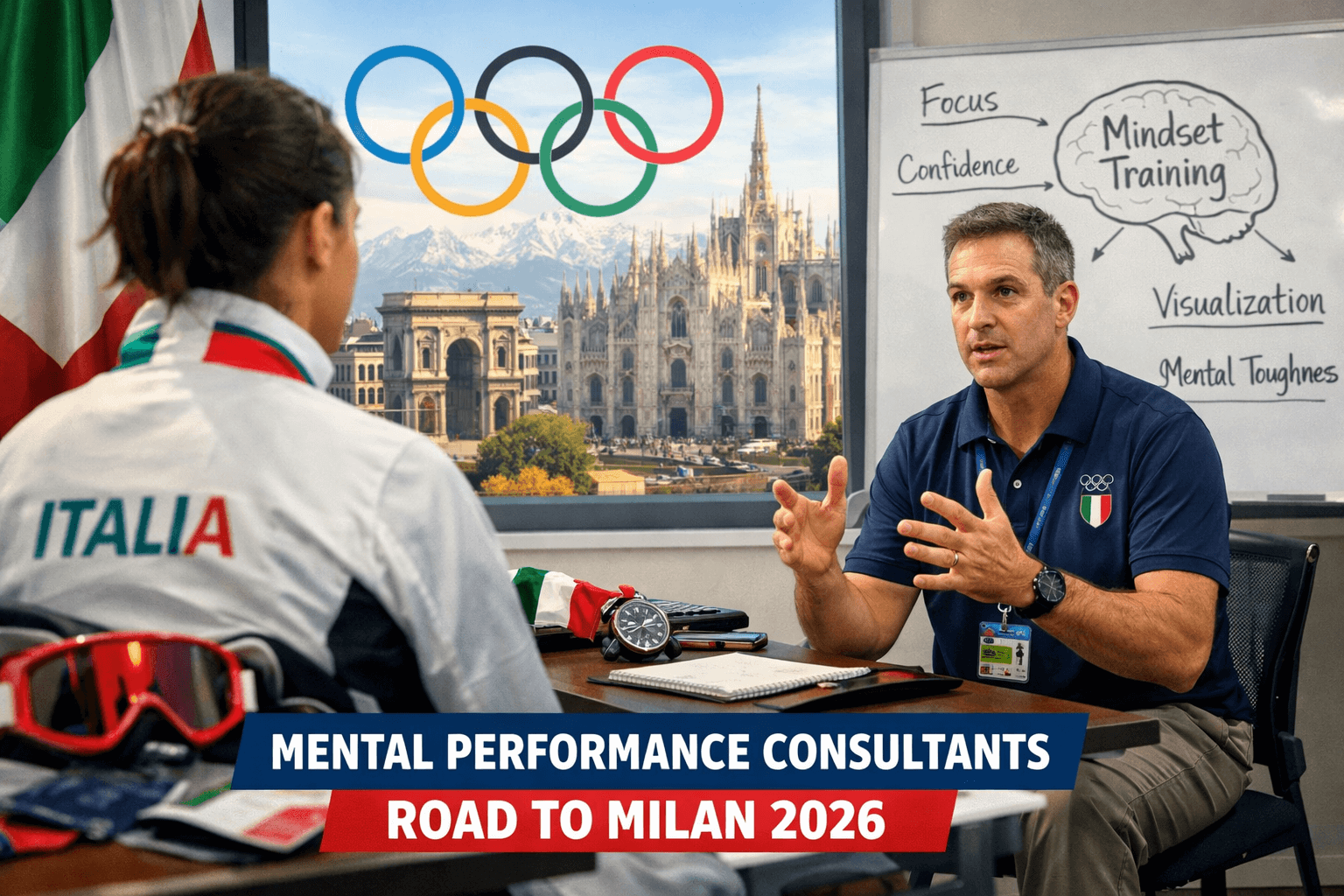
As preparations accelerate for the 2026 Winter Olympics in Milan-Cortina, a quieter but strategically significant shift is reshaping elite sport. Demand for Certified Mental Performance Consultants® (CMPCs) is rising sharply as athletes, teams, and governing bodies place greater emphasis on the psychological dimensions of performance alongside physical training.
CMPCs are trained and credentialed performance psychology professionals who work with individuals and teams to strengthen the mental side of performance, helping athletes remain composed under pressure and perform consistently at the highest level. As Olympic competition becomes increasingly defined by marginal gains, mental readiness is being recognised as a decisive competitive asset.
Growing Focus on Evidence-Based Mental Preparation
The increased attention on mental performance has been noted across both psychology and sport communities. Recent reporting by the American Psychological Association has highlighted how Olympians are prioritising mental performance as part of their overall preparation. Despite this growing awareness, many of the practical implications for the Milan Games remain underexplored, particularly in terms of how mental performance support is being formally integrated into elite training programmes.
The Association for Applied Sport Psychology (AASP), the world’s largest organisation dedicated to sport and performance psychology and the certifying body for CMPCs, reports growing interest from national federations and professional teams seeking structured, evidence-based approaches to mental preparation.
What Has Changed Since the Last Olympic Cycle
One of the most notable shifts since the previous Olympics is the evolution of conversations surrounding athlete mental health and performance. High-profile disclosures by elite athletes have accelerated awareness of psychological wellbeing, prompting sporting organisations to reassess how support is delivered.
At the same time, there is a clearer understanding of the distinction between mental health services and mental performance training. While both are critical, elite teams increasingly view them as complementary but distinct functions. CMPCs focus on performance enhancement rather than clinical treatment, addressing areas such as focus, confidence, pressure management, and competitive consistency.
Distinct but Complementary Roles in Elite Sport
This separation of roles has helped professionalise mental performance support across elite sport. Mental health clinicians continue to provide essential care related to wellbeing and psychological health, while CMPCs work proactively within performance systems to optimise execution in training and competition.
For high-performance programmes operating under intense scrutiny and financial investment, this dual-track approach allows athletes to receive targeted support without conflating performance challenges with mental health issues.
Preparing Athletes Mentally for Milan 2026
As Milan approaches, athletes are adopting more structured and long-term approaches to mental preparation. Rather than relying on reactive or last-minute interventions, many teams are embedding mental performance training into multi-year Olympic cycles.
This includes goal-setting frameworks, attentional control strategies, pressure simulations, and competition routines designed to support consistent execution under stress. Mental skills training is increasingly being treated as a core competency, developed alongside technical and physical capabilities.
Marginal Gains with Measurable Impact
The influence of mental preparation is particularly pronounced in sports where outcomes are decided by milliseconds, tenths of a point, or a single execution error. In such environments, the ability to maintain composure and deliver precise performance under pressure can be the difference between a medal and an early exit.
From a business perspective, the trend reflects a broader shift towards data-driven and outcome-focused investment in elite sport. As organisations seek measurable returns on performance support, evidence-based mental preparation is gaining credibility as a contributor to competitive success.
A Strategic Pillar of Olympic Preparation
With less than two years until the Milan-Cortina Games, mental performance is no longer a peripheral consideration within elite sport. Instead, it is emerging as a strategic pillar of Olympic preparation, influencing how athletes train, compete, and manage pressure on the world stage.
While the work of CMPCs may remain largely behind the scenes, their growing role underscores a fundamental shift in how success is pursued at the highest level of sport—one where mental readiness is as critical as physical execution.