


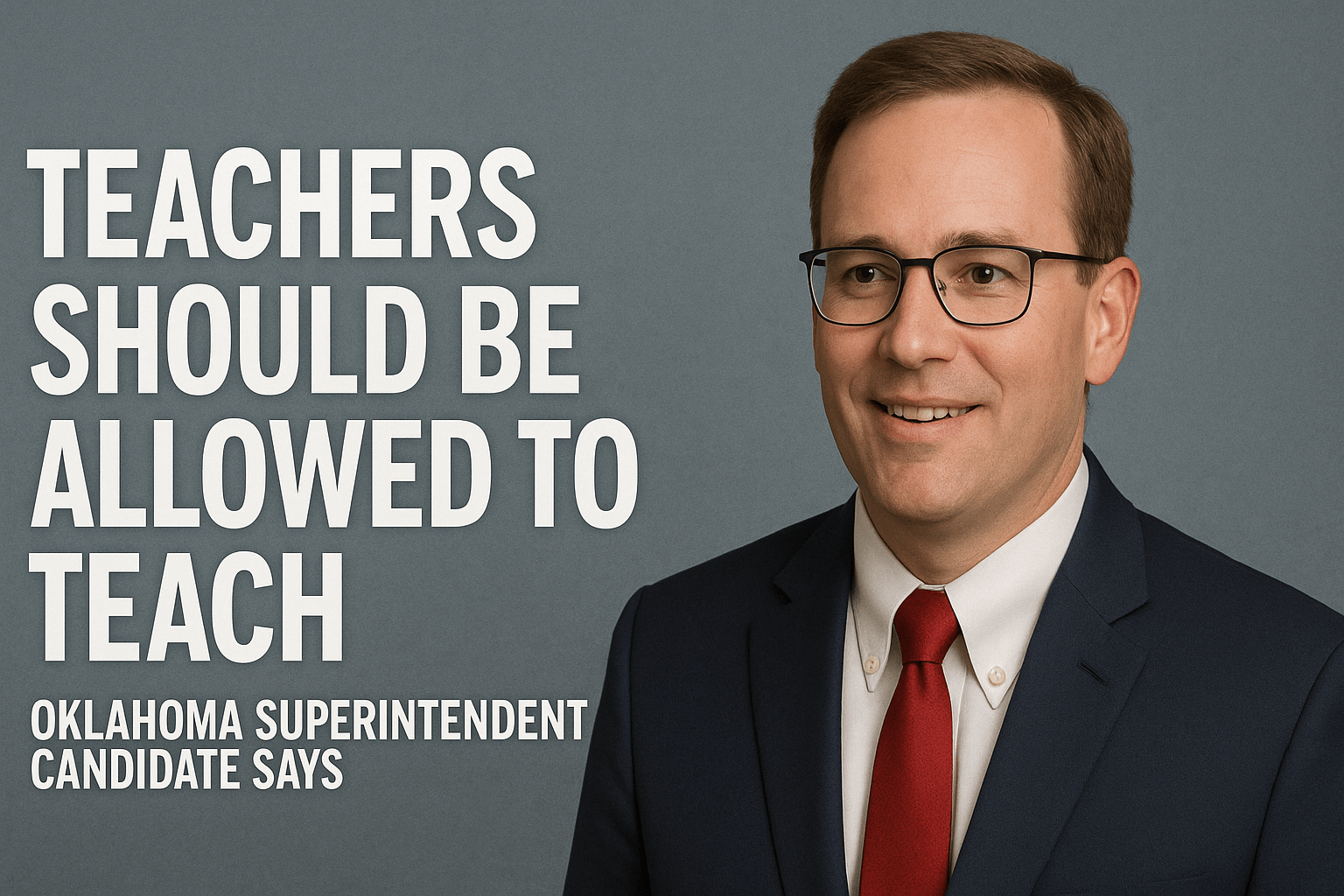
A renewed debate over education reform is gaining traction in Oklahoma as Dr John Cox, Superintendent of Peggs Public School and a candidate for State Superintendent, intensifies his call to reduce bureaucratic pressure on teachers and refocus classrooms on learning outcomes. His recent article, “Let Teachers Teach Again,” has drawn significant attention from educators, parents and community leaders who say the state’s current approach to testing and compliance is no longer sustainable.
At the core of Dr Cox’s message is, as he states, “a simple truth: teachers are the heartbeat of our schools. When they’re respected and equipped, students thrive. When they’re buried in testing, paperwork, or politics, outcomes suffer.” His proposals, which touch on testing reform, special education, and early literacy, have emerged as key talking points in the state’s intensifying policy discourse.
Calls to Reduce Testing Mandates
Dr Cox’s central argument focuses on reducing what he describes as excessive testing requirements that have become entrenched in Oklahoma’s public education system. Teachers, he says, face growing frustration over “outdated testing systems and compliance-heavy demands” that take valuable time away from teaching.
He argues that the existing model, which often delivers test results months after assessments are taken, limits the ability of educators to adjust instruction or support struggling pupils effectively. Instead, Dr Cox advocates the adoption of real-time benchmark assessments, which he says would empower teachers to make timely, data-informed decisions.
According to the summary provided with the article, “This story digs deeper into the growing frustration teachers feel around outdated testing systems and compliance-heavy demands. Dr. Cox offers a compelling alternative with real-time benchmark assessments that let teachers actually teach – not wait months for results that come too late to help kids.”
Supporters of the proposal argue that modernising assessment could both reduce administrative burdens and improve student performance by enabling faster intervention.
Special Education Under Strain
Another major issue highlighted by Dr Cox is the growing pressure on Oklahoma’s special education system. Schools across the state report increasing caseloads, workforce shortages and complex procedural requirements that leave teachers and families navigating what has been described as a labyrinth of paperwork.
The candidate has framed special education reform as a matter of dignity and effectiveness. “Special education teachers are among the most overburdened, and families often feel lost in a maze of paperwork,” the press materials note. Dr Cox promotes a shift towards parent-driven, growth-focused Individualised Education Programmes (IEPs), arguing that such a model would create a more collaborative environment and ultimately improve outcomes for pupils with additional needs.
By giving parents clearer roles and teachers more flexibility, his approach aims to reduce administrative backlogs while ensuring that children receive tailored, meaningful support.
Early Literacy as Economic Infrastructure
Dr Cox also links educational reform directly to long-term economic development—a message that has resonated strongly with business groups and workforce advocates. He argues that foundational literacy skills, developed in the first years of schooling, are critical not only for academic success but also for strengthening the state’s future labour market.
“If we want stronger academics and restored public confidence, early literacy is the foundation,” the release states. Dr Cox emphasises phonics, reading science and structured literacy instruction as essential tools for building reading mastery. In his view, “The future of Oklahoma’s workforce starts in kindergarten,” and improvements in early education are needed to ensure that future workers possess the skills required in an increasingly competitive economy.
Advocates for economic development note that states with strong early literacy programmes tend to show higher workforce participation and productivity in later decades. Dr Cox’s argument positions education policy not only as a social priority but as a strategic investment.
Growing Interest and Media Engagement
Dr Cox’s campaign indicates that interest in these reform themes is expanding across Oklahoma. Educators and parent groups have reportedly voiced support for reduced testing burdens and more responsive systems for special education and early reading. With education increasingly viewed as a determinant of economic stability and community wellbeing, his messaging appears to be gaining traction.
The release concludes with an invitation to the media: “If any of these align with what your team is covering, I’m happy to coordinate an interview with Dr. Cox or provide additional background.”
With education policy expected to feature prominently in the state’s political landscape over the coming year, Dr Cox’s proposals are likely to remain a focal point of public and business interest as Oklahoma debates the future of its schools.